
EV charging guide · Sigenergy
Sigenergy EV Chargers Explained: DC Charging From Your SigenStor and the Sigen AC Charger
The short answer: Sigenergy makes two kinds of EV charger. The DC charging module plugs into your SigenStor stack and charges your car directly from solar, battery and grid at up to 12.5 kW or 25 kW, depending on the version, through a CCS2 connector. The Sigen AC charger is a wall-mounted Type 2 charger in 7 kW (single-phase) or 11 kW and 22 kW (three-phase) versions. Both run in the mySigen app and can prioritise surplus solar.
- Written by Skylar Solar, the UK’s first Sigenergy Platinum installer, holding Platinum three years running
- 750+ Sigenergy installs and 3,000+ Aiko installs by our own team
- Rated 4.9 on Google from 381 reviews
We install across all of England and Wales.
What EV chargers does Sigenergy make?
If you have, or are planning, a Sigenergy battery, it makes sense to look at Sigenergy’s own EV chargers first. They are designed to work with SigenStor and live in the same app, which keeps solar charging simple. There are two options:
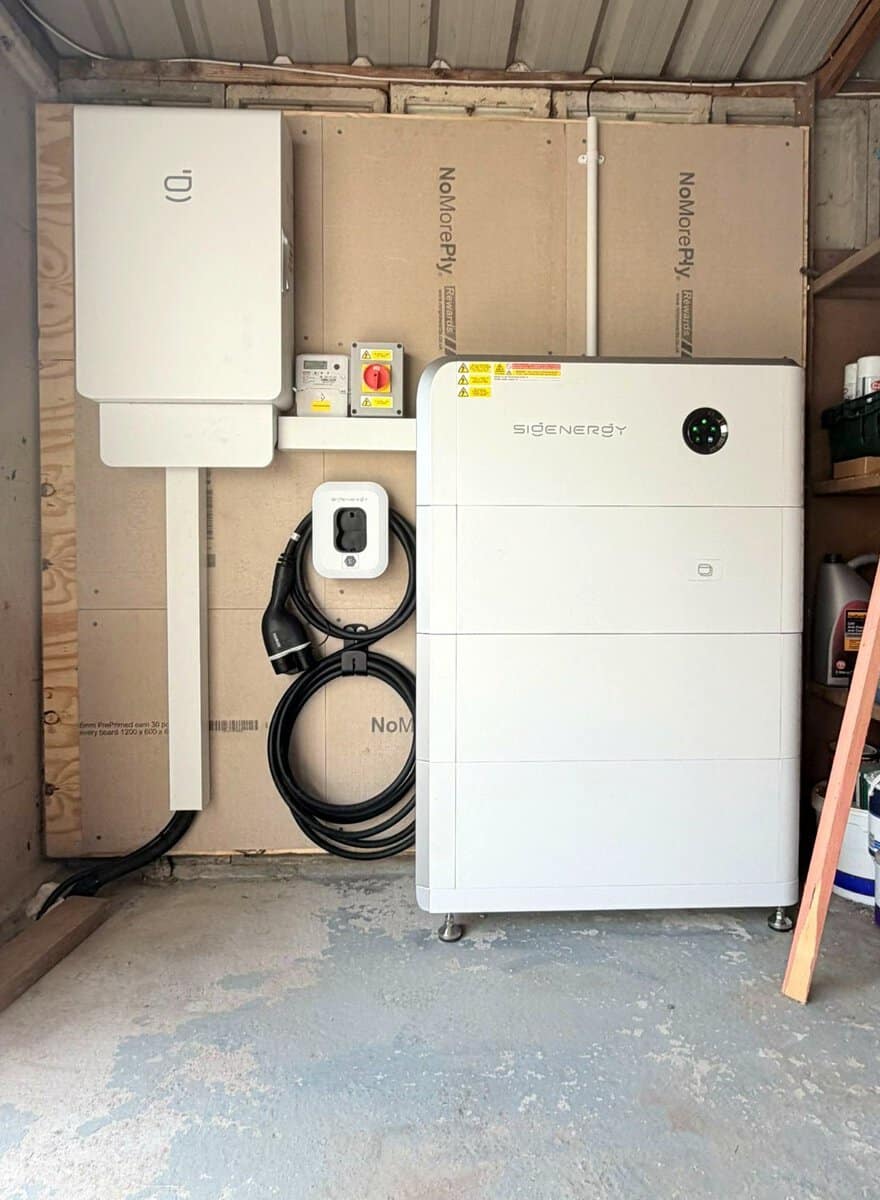
- Sigen EV DC Charging Module: part of the SigenStor stack itself. DC charging, bidirectional hardware, CCS2 connector.
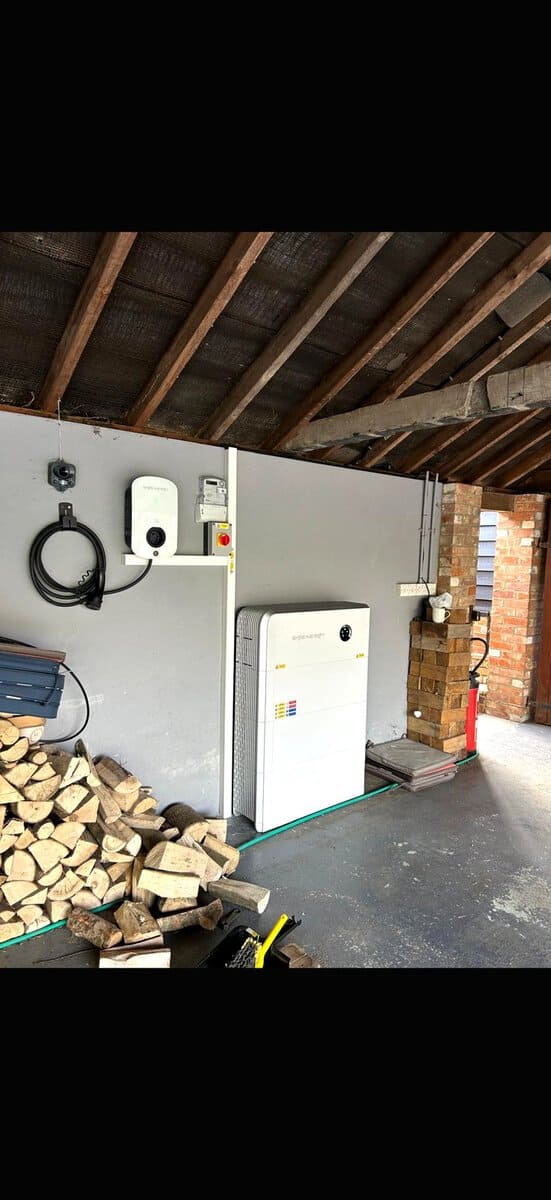
- Sigen AC Charger: a separate wall-mounted charger with a Type 2 connection, like most home chargers, in single- and three-phase versions.
The Sigenergy DC charger: charging straight from your SigenStor
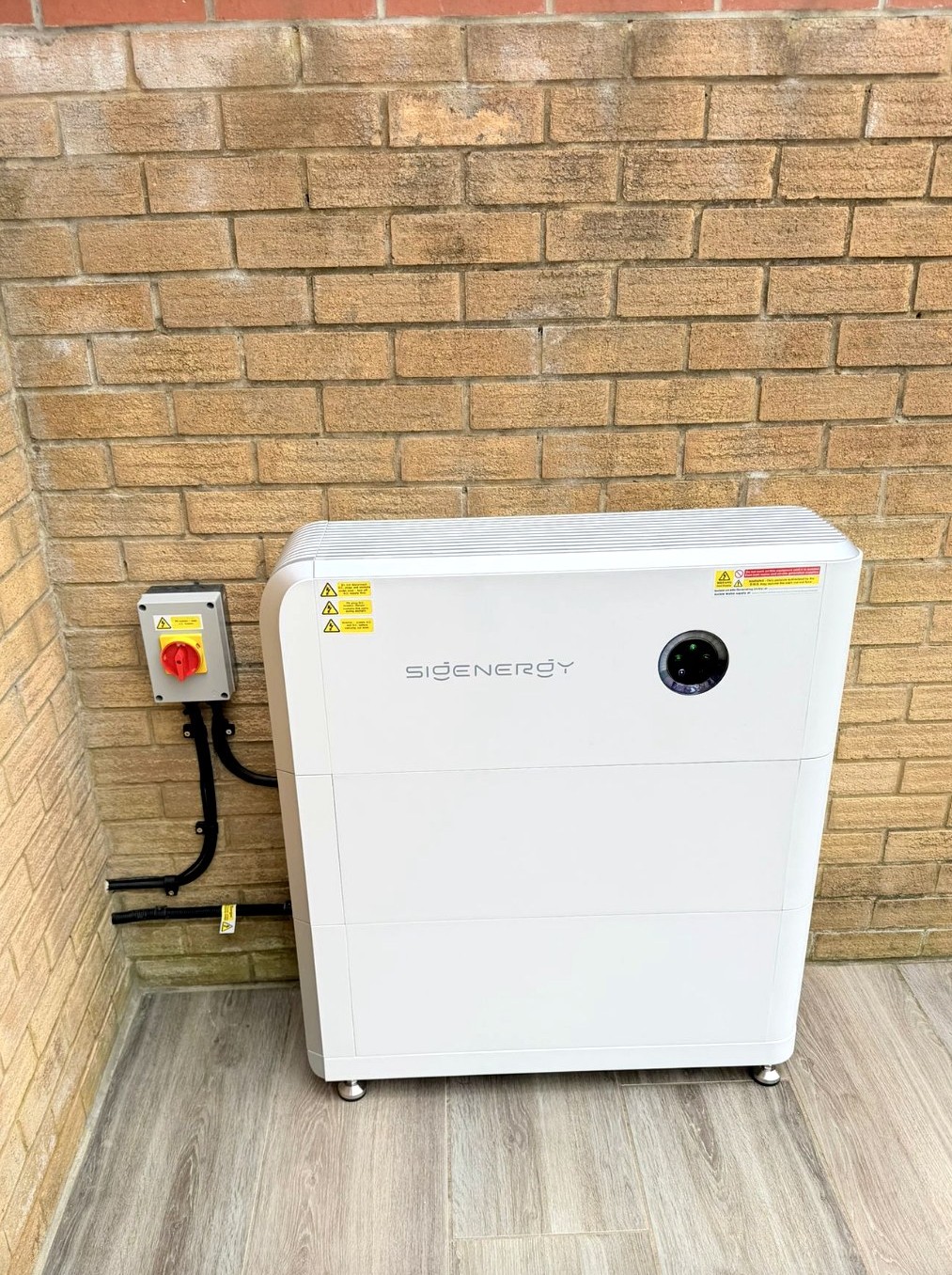
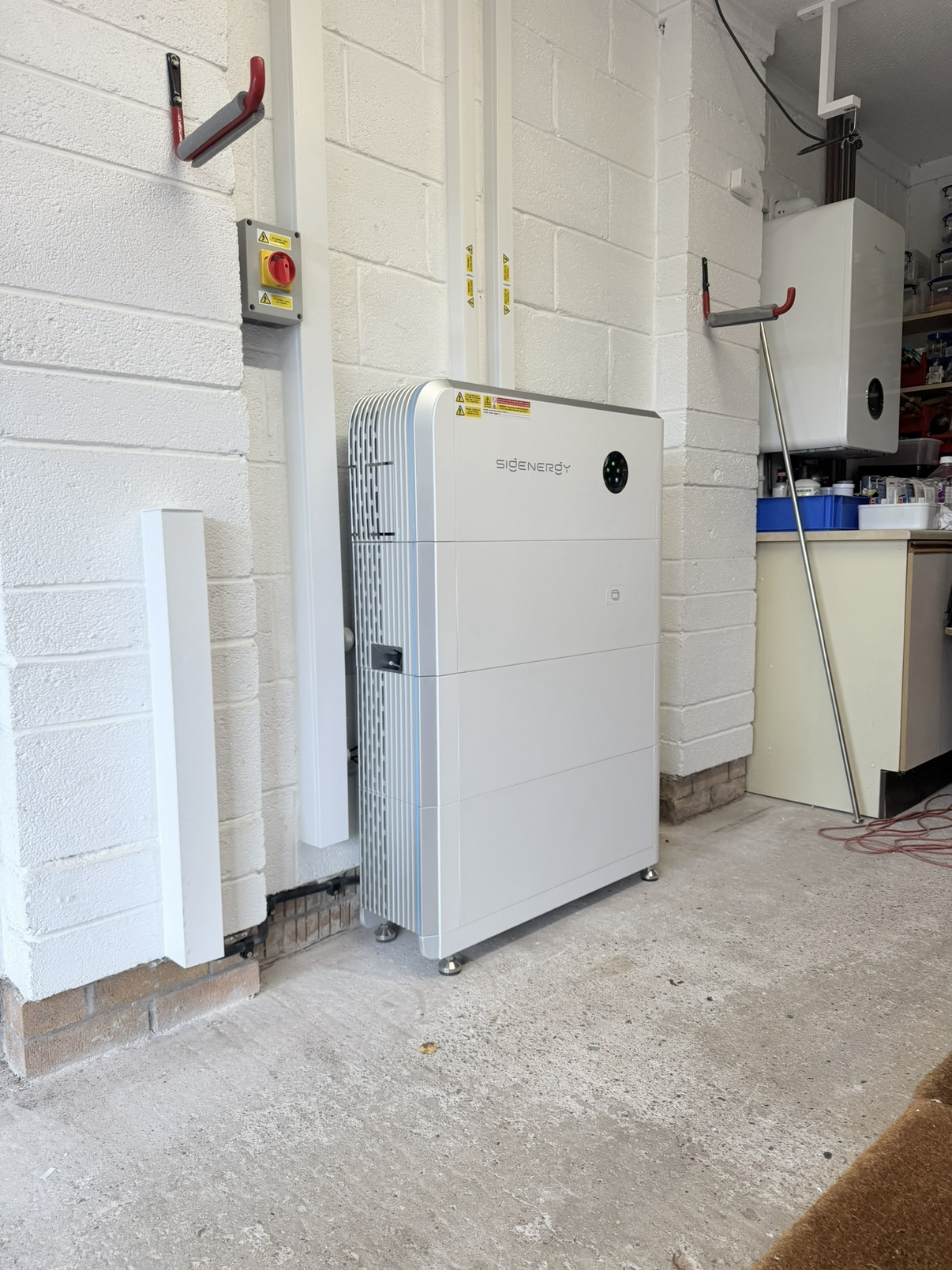
Most home chargers send AC power to the car, and the car’s own on-board charger converts it to DC for its battery. The Sigenergy DC module skips that step. It sits in the SigenStor stack and takes DC power from your solar panels and home battery and sends it straight to the car.
According to Sigenergy’s datasheet, the module comes in two versions, rated at 12.5 kW and 25 kW maximum charging power, with a CCS2 connector and an integrated cable of 7.5 m or 10 m. It must be used with a Sigen Energy Controller, so it is for SigenStor homes. It supports several charging modes:
- PV surplus charging: charge only from spare solar.
- Battery boost: top up from the home battery, down to a cut-off level you set so the house keeps enough for the evening.
- Grid and fast charging: draw from grid and solar together when you need the car charged quickly.
- Scheduled charging: set start times around your tariff.
Which cars work with the Sigenergy DC charger?
The DC module uses a CCS2 connector, the standard DC charging plug on most electric cars sold in the UK. Sigenergy lists a charging voltage range of 150 V to 1,000 V, which covers most current EVs. How fast your car actually charges depends on the car as well as the charger, and some cars charge more slowly at home than their headline rapid-charging figure suggests.
If your car uses a different connector, or you are not sure, check with us before you choose. We will confirm compatibility for your vehicle on your design call.
The Sigen AC charger: 7 kW, 11 kW and 22 kW
The Sigen AC charger is a conventional wall-mounted home charger. Sigenergy’s UK-market datasheet lists:
- 7 kW for single-phase supplies, which is most UK homes.
- 11 kW and 22 kW for three-phase supplies.
- A tethered Type 2 cable or a Type 2 socket with shutter, IP65-rated for indoor or outdoor fitting.
- PV surplus charging, scheduling and battery boost through the mySigen app, and dynamic load management with a Sigen Power Sensor to stop your main fuse being overloaded.
Your car’s on-board charger sets the real limit on AC charging, so a 22 kW charger will not speed up a car that only accepts 7 kW or 11 kW on AC.
Sigen EVAC G2: the new AC charger with V2H
At Intersolar Europe 2026 Sigenergy announced the Sigen EVAC G2, a next-generation wall-mounted AC charger designed to work with its home energy systems, including SigenStor Neo. Unlike today’s Sigen AC charger, Sigenergy’s G2 materials describe bidirectional (V2X) charging with black-start capability, so a compatible electric car can help bring the home back after a grid outage (vehicle-to-home).
Sigenergy’s preliminary G2 datasheet lists the same power bands as the current AC charger: 7 kW single-phase, and 11 kW and 22 kW three-phase, with a Type 2 tethered cable or socket. Sigenergy notes that V2G hardware is ready, but activation still needs support from the grid and the vehicle. As with the DC module, we will only recommend G2 for V2H once we know your car, your supply and what is actually available to install in the UK.
UK model codes, availability date and install paperwork for G2 were still being confirmed when we checked Sigenergy’s announcement. If you want V2H today, the route we can design around now is the Sigen EV DC charging module in a SigenStor stack. Ask on a design call whether G2 is the better fit once it is released for your home.
DC module or AC charger: which is better for you?
- Choose the DC module if you are fitting a SigenStor, want the most direct way to charge from solar and battery, have a CCS2 car, and are interested in future vehicle-to-home use.
- Choose the AC charger if your car is mostly charged overnight on a cheap tariff, the parking space is away from where the SigenStor goes, or you want a standard Type 2 charger. For most single-phase homes, 7 kW is plenty for overnight charging.
Some households have both. We will recommend what fits your car, your driving and your property.
Not sure which charger suits your car?
Book a free design call. Tell us your car and your typical mileage, and we will recommend the right Sigenergy charging set-up for your home.
Bidirectional charging, V2H and V2G in the UK
Two Sigenergy products are in play for vehicle-to-home. The Sigen EV DC charging module in a SigenStor stack is bidirectional today: it can send power to the car and, in principle, take power back from it, which is what makes V2H (running your house from the car) and V2G possible. Sigenergy has also announced the Sigen EVAC G2 AC charger with bidirectional V2H and black-start capability; see the section above for what is confirmed and what is still pending for the UK.
Sigenergy is clear that V2X functionality is limited by the EV’s capabilities, and that features will be added by software update as standards are published and tested. In practice, it depends on whether your car manufacturer allows bidirectional charging, and on grid and market rules. We will tell you honestly what is and is not possible with your car today, and we will not sell you a charger on V2H alone.
Charging your EV from solar and battery
Charging from your own solar is the main reason people pair an EV charger with SigenStor. On a sunny day, surplus solar goes to the car instead of the grid. In the evening, battery boost can top the car up while protecting enough charge for the house. On a time-of-use tariff, such as Octopus Energy’s Go or Intelligent Flux, scheduled charging can use the cheaper hours instead. Check your supplier’s current terms. If you are working out how much storage to add for an EV, see What size solar battery do I need?
What a Sigenergy EV charger installation needs
- A supply check: we look at your main fuse and existing loads to make sure your supply can take EV charging, and use load management where needed.
- Earthing and protection: UK home chargers need suitable earthing and protection. The UK-market Sigen AC charger includes built-in PEN fault protection.
- Location and cable route: the DC module’s cable is 7.5 m or 10 m, so the SigenStor needs to be within reach of where you park. An AC charger can go nearer the drive.
- DNO notification: your network operator must be told about EV chargers, and about the DC module as part of your SigenStor. We handle the paperwork.
- Single- or three-phase: this decides which AC charger suits you.
Warranty, app and aftercare
Sigenergy’s warranty on the EV DC module is shorter than on the battery and energy controller. We confirm the current UK terms for each part in writing with your proposal. Both chargers are managed in the mySigen app alongside your solar and battery. If something is not working as it should, call us. Aftercare is central to how we work, and as the UK’s first Sigenergy Platinum installer, holding Platinum three years running, we have a direct channel to Sigenergy’s technical team. Read our SigenStor review for the full system.
Sigenergy EV charger FAQs
How fast is the Sigenergy DC charger?
Sigenergy’s datasheet lists two versions of the EV DC charging module, rated at 12.5 kW and 25 kW maximum charging power. Your car’s own limits also affect the actual charging speed.
Which cars are compatible with the Sigenergy DC charger?
Cars with a CCS2 DC charging socket, which covers most electric cars sold in the UK. Sigenergy lists a 150 V to 1,000 V charging range. We confirm compatibility for your car before you order.
Do I need a SigenStor to use the Sigenergy DC charger?
Yes. The DC module fits into the SigenStor stack and must be used with a Sigen Energy Controller. The Sigen AC charger is a separate wall-mounted unit.
Is there a 7 kW Sigenergy EV charger?
Yes. The Sigen AC charger comes in a 7 kW single-phase version, plus 11 kW and 22 kW three-phase versions, with a Type 2 tethered cable or socket.
Can I power my home from my EV with Sigenergy?
The DC module has bidirectional hardware for vehicle-to-home and vehicle-to-grid, but Sigenergy says this is limited by the EV’s capabilities and future standards. It depends on your car manufacturer enabling it.
Can I charge my car from my solar battery?
Yes. Both Sigenergy chargers support solar surplus charging and battery boost, with a cut-off level you set so your home keeps enough stored energy for the evening.
Plan your solar-powered EV charging
Book a free remote design call and we will design Sigenergy battery and EV charging around your car and your home. We install across all of England and Wales.
Prefer to see it in person? Our showroom is at Shalford Court, 95 Springfield Road, Chelmsford, Essex CM2 6JL, open by appointment Monday to Friday, 9am–5pm. See showroom details and map, or read more about us as a Sigenergy Platinum installer.
More guides from our team
- Sigenergy SigenStor review: how it works
- What size solar battery do I need?
- Adding a battery to your existing solar panels
- Sigenergy SigenStor compared: an installer’s honest comparison
Specifications from Sigenergy’s Sigen EV DC Charging Module and Sigen EVAC (UK market) datasheets, Sigenergy’s Sigen EVAC G2 announcement and preliminary G2 datasheet, and the SigenStor product page (sigenergy.com), checked 9 October 2026. Charging speeds depend on your vehicle. Tariff terms change; check the current details with your energy supplier.
