
Battery guide · Sizing your home battery
What Size Solar Battery Do I Need? A UK Guide to Sizing Your Home Battery
The short answer: Size your battery to the electricity you use when your panels are not producing, mainly evenings and overnight, plus whatever spare solar you can realistically store on a sunny day. Your total daily use is the wrong starting point. Because a Sigenergy SigenStor is built from modules, we can match it closely to your real smart-meter data and add more storage later if your needs grow.
- Written by Skylar Solar, the UK’s first Sigenergy Platinum installer, holding Platinum three years running
- 750+ Sigenergy installs and 3,000+ Aiko installs by our own team
- Rated 4.9 on Google from 381 reviews
We install across all of England and Wales.
What size solar battery do I need? Start with the right question
Most people start with “how much electricity do we use a day?” It is a reasonable question, but it leads to the wrong battery. Your solar panels already power your home during daylight. The battery’s job is to cover the hours when they cannot.
So the better questions are: how much do you use from late afternoon until the next morning, and how much spare solar do you send to the grid on a good day? The battery should sit somewhere between those two numbers. Bigger than your overnight use, and it will rarely empty; bigger than your spare solar, and it will rarely fill from the sun (unless you also charge it on a cheap tariff, which we cover below).
How much battery storage do I need for my house?
The best evidence is your own smart-meter data, which shows your use in half-hour slots. Your supplier’s app or online account usually lets you download it. Look for three things:
- Evening and overnight use: roughly 4pm to 8am, when solar output is low or zero.
- Seasonal change: winter evenings use more than summer ones, and solar output is far lower in winter.
- Big loads and when they run: an electric car, a heat pump, an electric shower or a hot tub change the picture completely.
No smart meter? A year of bills plus a description of your routine still gets us a sensible starting point.
What size battery for a 3 or 4 bedroom house?
We get asked this a lot, and the honest answer is that the number of bedrooms tells us much less than how you live. A four-bedroom house with two people out all day can need less storage than a three-bedroom house with a family at home, an EV on the drive and a heat pump.
That is why we do not sell batteries by house size. We look at your data, your roof and your plans, then recommend a size. If someone quotes a fixed size without asking about your usage, ask how they arrived at it.
Usable vs nominal kWh: read the right number
Battery capacity is measured in kilowatt-hours (kWh). Spec sheets often show two figures:
- Total (nominal) capacity: everything the cells can hold.
- Usable capacity: what you can actually draw on in daily use. This is the number to compare.
For example, Sigenergy’s datasheet lists the SigenStor BAT 10.0 module at 9.04 kWh total and 8.76 kWh usable. When you compare quotes, make sure you are comparing usable capacity at beginning of life.
Power matters too. Capacity (kWh) is how much energy is stored; power (kW) is how fast it can be delivered. A big battery that can only discharge slowly may not keep up with an oven, a kettle and a shower at once. In a SigenStor, each module adds charge and discharge power, and the energy controller sets the overall limit, so we size both together.
Sigenergy battery sizes in the UK
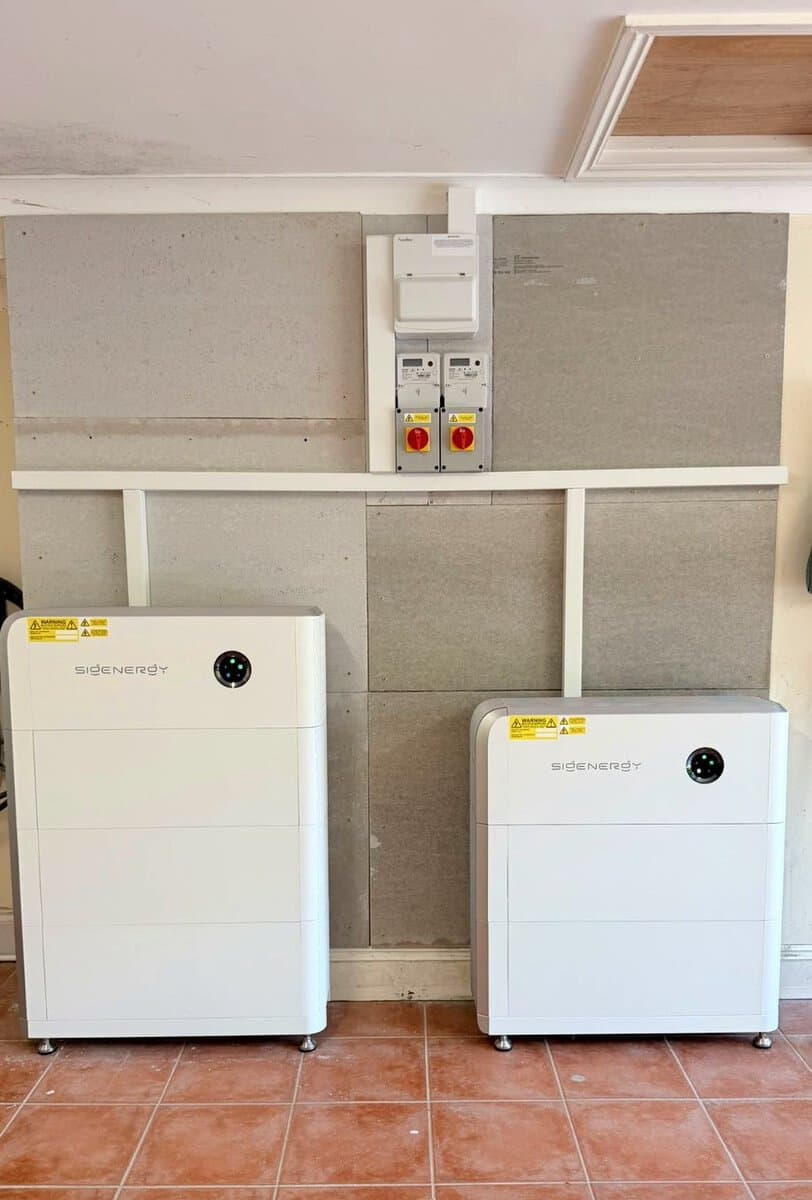
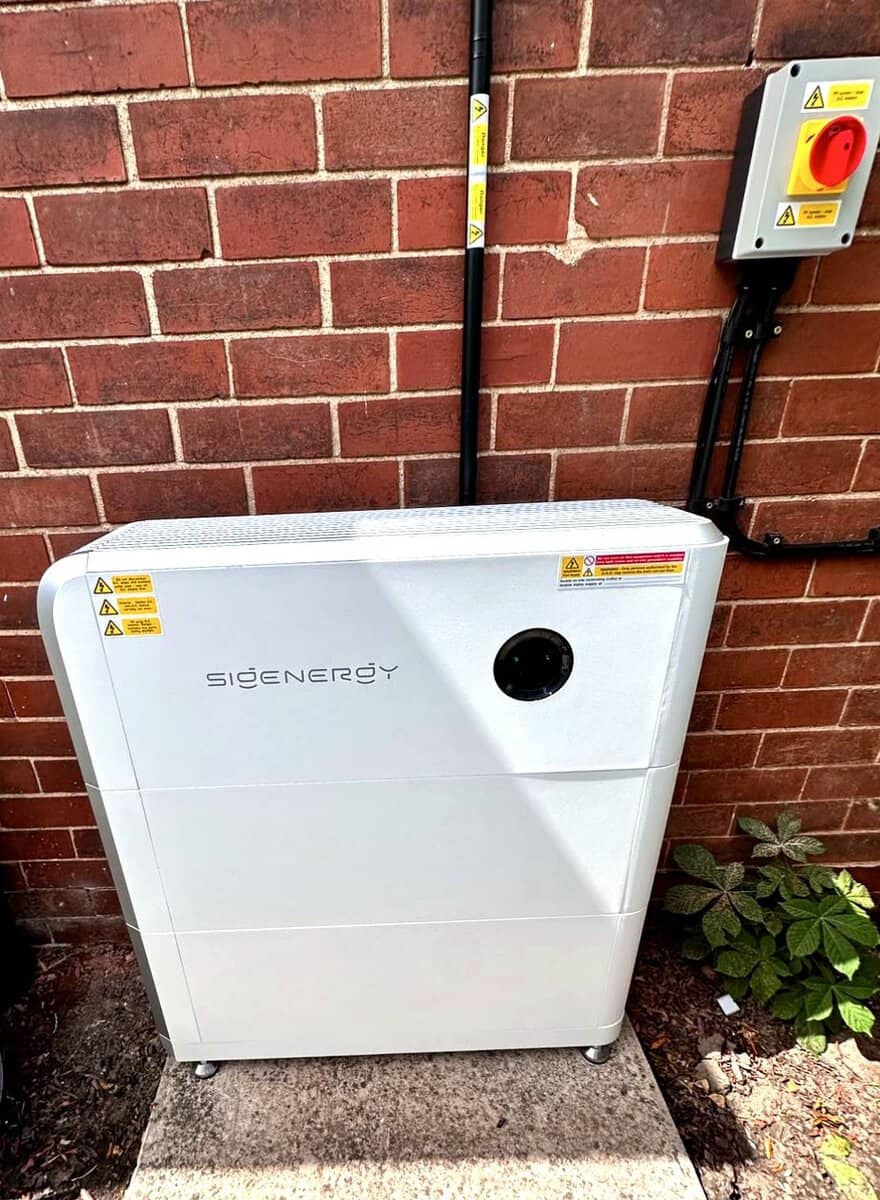
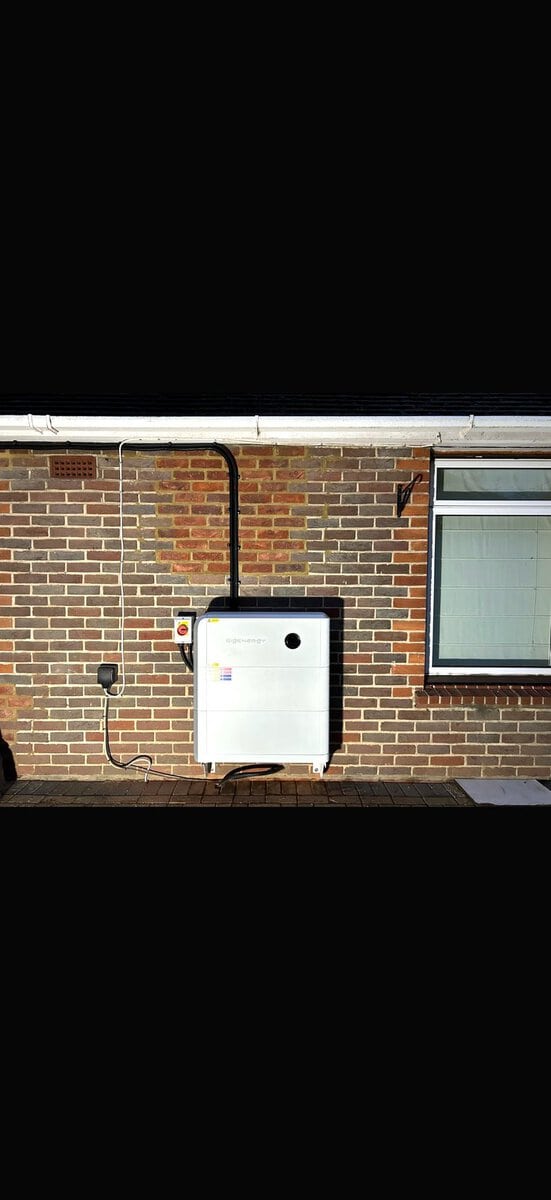
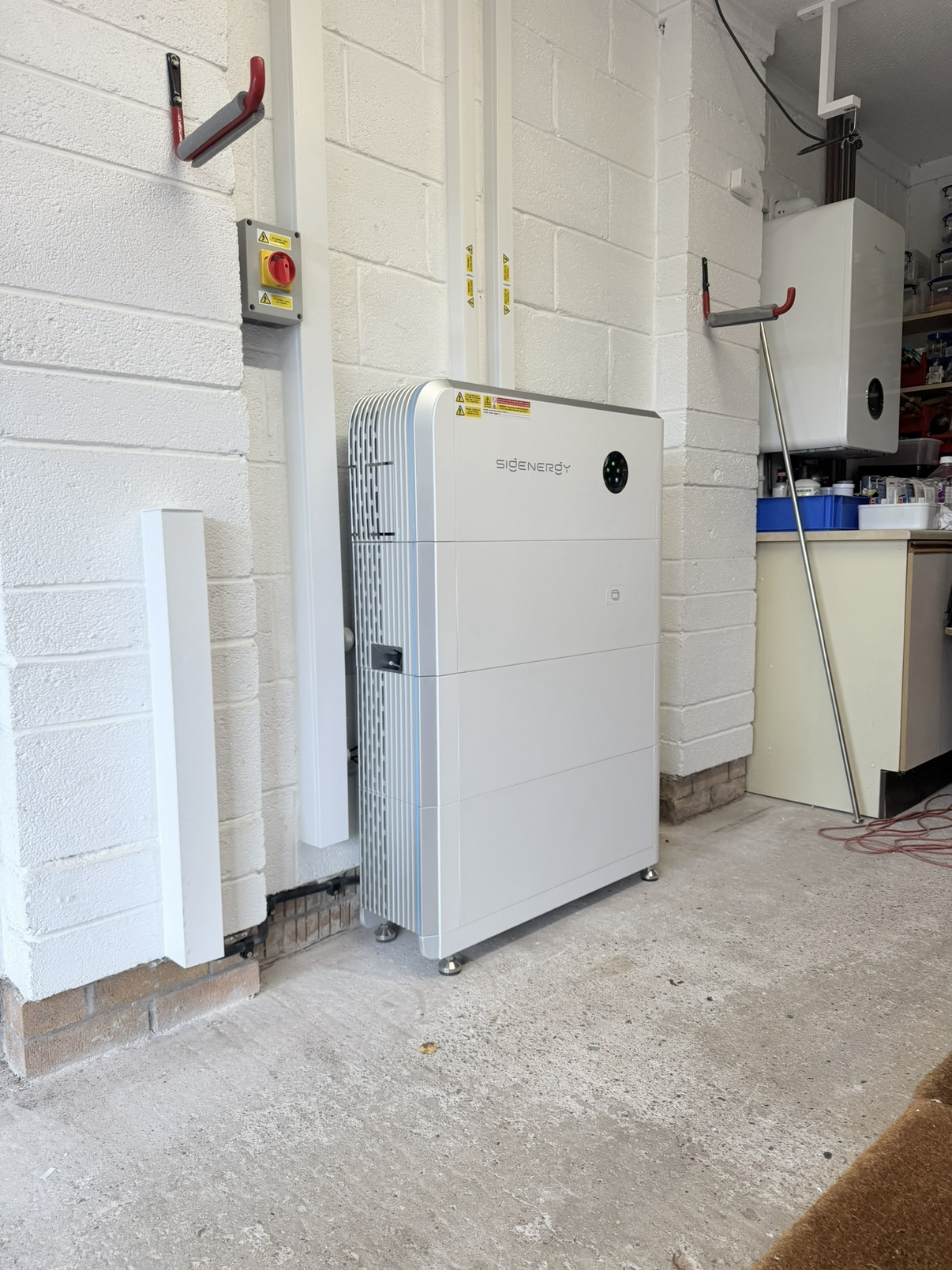
SigenStor storage is built from stackable modules, one to six per energy controller. Sigenergy’s current datasheet lists:
- BAT 6.0: 5.84 kWh usable per module.
- BAT 10.0: 8.76 kWh usable per module, up to 52.56 kWh usable with six on one controller.
You can mix sizes, and Sigenergy’s built-in DC-DC optimiser in each pack lets you add a module to an existing stack later. That takes the pressure off getting it perfect on day one: we can size for today and plan space for tomorrow. See our Sigenergy SigenStor review for how the stack works.
A worked example (illustrative)
Here is how we think it through, using simple round numbers rather than a real customer:
- Smart-meter data shows about 9 kWh used between 4pm and 8am on a typical day.
- On a sunny day, the panels produce around 10 kWh more than the home uses in daylight.
- A battery with roughly 9 kWh usable would cover most evenings and fill from solar on most sunny days. In SigenStor terms, that is close to one BAT 10.0 module (8.76 kWh usable), with a second module worth considering if winter evenings run higher.
- If the household is getting an EV next year, we would plan the space to add modules later rather than oversize now.
Your numbers will be different, which is exactly why we size from your data.
Want us to run the numbers for you?
Book a free design call and send us your smart-meter data. We will size your battery from how you actually use electricity, with no pressure and no guesswork.
What size solar battery do I need to charge an electric car?
An EV can use more electricity in one charge than the rest of the home uses in a day, so it changes battery sizing more than anything else. There are two common approaches:
- Charge the car on a cheap overnight tariff straight from the grid, and size the battery for the home only. Often the most sensible choice.
- Charge from solar and battery during the day or evening. This needs more storage and works best if the car is often at home. With Sigenergy, a DC charging module in the stack can charge the car from solar and battery directly.
Our Sigenergy EV charger guide explains the options.
Heat pumps and winter use
A heat pump shifts a lot of your energy use into winter, exactly when solar output is lowest. A battery can still help by charging on a cheaper overnight rate and running the heat pump through the dearer hours, but sizing has to be based on winter data, not summer. If you are planning a heat pump, tell us on your design call so we can allow for it.
Time-of-use tariffs change the answer
On a time-of-use tariff, such as Octopus Energy’s Agile, Go, Flux or Intelligent Flux, your battery can also charge from the grid when electricity is cheaper and cover the dearer hours. That means the battery can be useful all year, not just in summer, and it may justify more storage than solar alone would. Tariff terms change, so check the current details with your supplier. We set the system up around your tariff at handover. Already have panels? See adding a battery to existing solar.
Solar battery size FAQs
What size solar battery do I need in the UK?
Enough usable storage to cover your evening and overnight use, without being much bigger than the spare solar you can store on a good day. Your smart-meter data is the best guide. We size SigenStor systems from that data on a free design call.
How many kWh battery do I need for my house?
It depends on your usage pattern, not the size of the house. Look at the kWh you use between roughly 4pm and 8am, allow for winter, and add any EV or heat pump plans. That gives a much better answer than a rule of thumb.
Is it better to get a bigger battery?
Not always. A battery much bigger than your overnight use or spare solar will rarely be fully used, unless you also charge it on a cheap tariff. With a modular SigenStor you can start at the right size and add modules later.
What is the difference between usable and total battery capacity?
Total capacity is what the cells hold; usable capacity is what you can draw on day to day. For example, Sigenergy lists the BAT 10.0 at 9.04 kWh total and 8.76 kWh usable. Always compare usable figures.
Can I add more battery storage later?
With Sigenergy, yes. SigenStor takes one to six modules per energy controller, and new modules can be added to an existing stack later.
Get your battery sized properly
Book a free remote design call with the UK’s first Sigenergy Platinum installer, holding Platinum three years running. We install across all of England and Wales.
Prefer to see it in person? Our showroom is at Shalford Court, 95 Springfield Road, Chelmsford, Essex CM2 6JL, open by appointment Monday to Friday, 9am–5pm. See showroom details and map, or read more about us as a Sigenergy Platinum installer.
More guides from our team
- Sigenergy SigenStor review: how it works
- Adding a battery to your existing solar panels
- Sigenergy EV chargers explained
- Sigenergy SigenStor compared: an installer’s honest comparison
Module capacities from Sigenergy’s Sigen Battery datasheets (sigenergy.com), checked 7 October 2026. The worked example uses illustrative round numbers, not customer data. Tariff terms change; check the current details with your energy supplier.
